 +86-29-87300696




Raw or Gelatinized Maca Powder? What the Label Does Not Tell You
October 29
Most maca inquiries that reach a manufacturer start with the same sentence: the buyer has a quote for “maca powder” and wants to know whether it is the right one. The quote rarely specifies whether the material is raw root powder, gelatinized root powder, or an extract, yet these three products behave very differently in a capsule, a stick pack, or a bulk blend. The choice is not a matter of quality tiers; it is a question of which physical and chemical profile the finished product requires.
Why the Two Forms Behave Differently in a Capsule
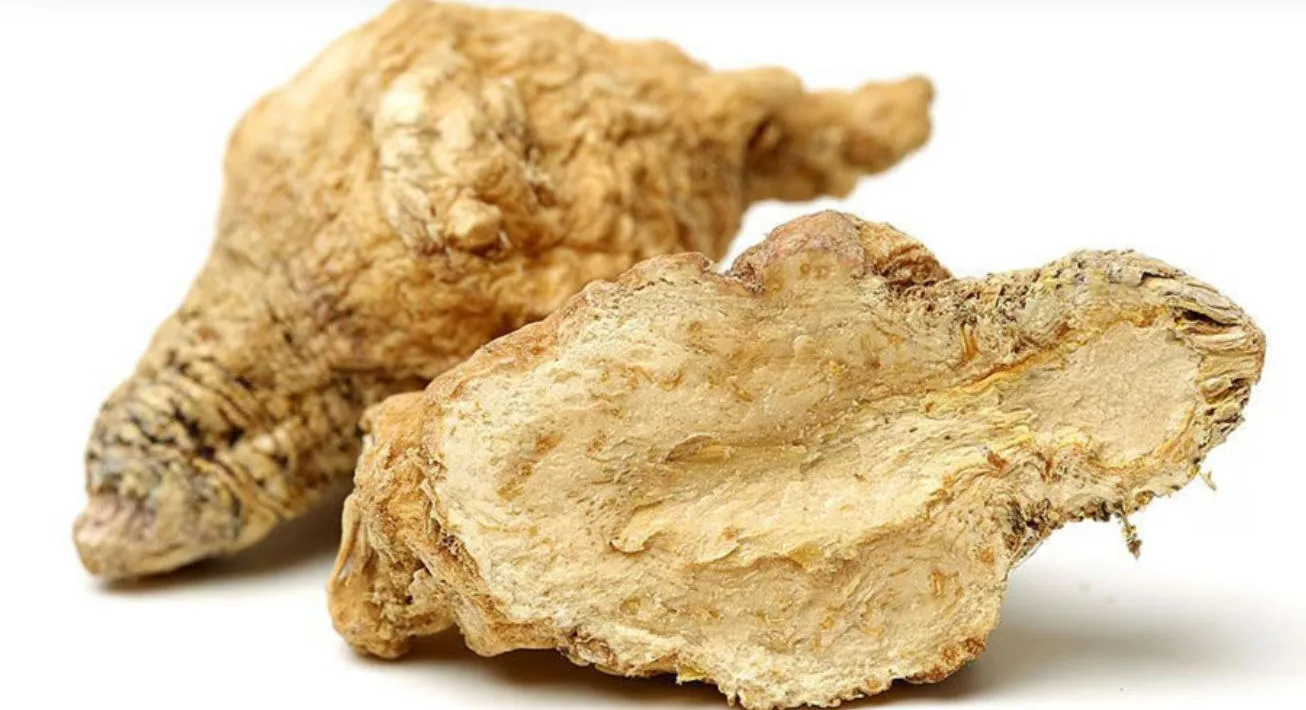
Raw maca is dried root that has been milled. It carries the full starch load of the tuber, along with the fiber and the earthy, peppery flavor that consumers either accept or dislike. Gelatinized maca has been cooked under pressure before drying, which breaks down a large share of that starch and leaves a denser, sweeter powder with a malt-like note.
In a capsule, the difference shows up as dose volume. A raw powder needs more mass to deliver the same root solids, so the capsule gets bigger or the fill weight drops. In a drink mix, it shows up as texture and taste. In a bulk blend, it shows up as flow. A powder with high starch content can bridge in a hopper and slow a filling line, which is a production problem rather than a specification problem.
Fill Weight and Capsule Size
A formulator who fixes a 500 mg fill weight and then changes the powder format can end up with a product that no longer matches its label. Gelatinized powder is denser per unit volume, so the same capsule shell holds more of it. The practical sequence is to choose the shell, measure the tapped density of the candidate powder, and then set the fill weight against the assay you intend to claim.
Do this before the packaging is printed, not after. Capsule size is printed on the carton, and a change late in the project means new artwork, a new filling trial, and a delay that usually costs more than the material itself.
Flow on a Filling Line
Starch-rich powders absorb moisture from the room and can become sticky at the punch or the dosator. A contract manufacturer running high-speed equipment will notice this before a brand owner will. Ask the filler whether they have run the candidate powder before, and ask the supplier for moisture and particle size so the answer can be verified rather than assumed.
Where the line is the constraint, gelatinized powder is usually the safer first trial, because the starch has already been modified and the powder behaves more predictably across humidity changes.
What Gelatinization Actually Does to the Starch
The word “gelatinized” describes starch behavior, not an added ingredient. When the root is heated under pressure in the presence of moisture, the starch granules absorb water, swell, and lose their crystalline structure. Drying then fixes the material in a pre-gelatinized state, which disperses more readily in water and digests differently.
Nothing is added during this step, and no animal gelatin is involved despite the name. Buyers who require a vegan statement should still request one, because the claim depends on the entire processing facility rather than the name of the unit operation.
What the Process Changes and What It Does Not
Gelatinization reduces starch and improves dispersibility. It does not standardize the macamides, and it does not turn a root powder into an extract. A gelatinized powder can still carry a weak marker level, and a buyer who assumes otherwise is buying a process rather than a specification.
That distinction matters at the label stage. A product sold on the root, with the root’s traditional positioning, can use either form. A product sold on a quantified active needs an extract with an assay, and no amount of processing on the root side will substitute for that number.
Where the Process Goes Wrong
Over-processing produces a dark, sticky powder with a burnt note, and under-processing leaves a starchy material that behaves like raw powder while being sold as gelatinized. Both failures are visible in a sample, which is why the sample request should include a taste and dispersion check rather than a photograph.
How Maca Powder Is Made
Root powder follows a short route: roots are harvested, cleaned, and dried, then milled and screened to the requested mesh size. The drying method matters because sun drying and low-temperature dehydration produce different colors and microbial loads, and the buyer should verify which method the supplier employs.
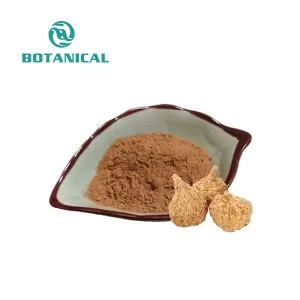
Extract follows a longer route: the milled root is extracted with a solvent, the liquid is concentrated, and the concentrate is spray-dried onto a carrier or dried directly into a powder. The result is standardized to a marker. Botanical Cube provides maca extract powder at 0.6% macamide tested by HPLC, with extraction ratios of 4:1, 10:1, 20:1, and 50:1 available.
Drying Method and Its Effect on Color
Sun drying is economical and traditional, yielding a beige-to-tan powder with variable microbial counts. Low-temperature mechanical drying costs more but produces a lighter, more consistent color with a lower bioburden. For a retail product where the powder is visible in a clear jar, low-temperature drying is usually well worth the difference.
Request a color reference standard across the last three lots. Lot-to-lot color drift is often the first complaint a brand receives from consumers, and it is far easier to control during dehydration than to mask in a finished blend.
Extraction and Carrier Choice
An extract is only as good as its carrier. Maltodextrin is common and inexpensive, but it adds carbohydrates that a low-sugar or keto formulation may not permit. Where the carrier affects the label claim, ask what percentage of the powder consists of excipients and whether a carrier-free option is available.
The extraction ratio describes the raw material input, not the active output. A 20:1 extract produced with a large carrier fraction can actually deliver a lower marker dose per gram than a 10:1 extract dried without excipients.
Comparing the Four Forms on a Purchase Order
| Form | What It Is | Best Fit | What to Ask For |
|---|---|---|---|
| Raw root powder | Dried and milled root | Smoothies, functional food blends | Mesh size, moisture, microbiological count |
| Gelatinized root powder | Pressure-cooked, dried, and milled root | Capsules, gummies, powdered beverages | Degree of gelatinization, sensory evaluation |
| Extract powder | Standardized active concentrate | High-potency capsules, targeted supplements | Marker assay, extraction ratio, HPLC data |
| Colored root powders | Milled red or black root phenotypes | Demographic-positioned retail lines | Same compliance documentation as raw root |
Botanical Cube supplies raw maca root powder, the gelatinized grade, a standardized extract, and red maca root powder, allowing brand formulators to benchmark multiple delivery formats against their finished matrix before commercial scale-up.
Color Is a Market Position, Not a Grade
Yellow roots dominate the harvest, while red and black roots are separated by hand or optical sorting and command a premium. Retail lines frequently use red maca for women’s wellness positioning and black maca for men’s vigor formulas. These are marketing decisions rather than standardized clinical categories, and the certificate of analysis should maintain the same analytical rigor regardless of the root color.
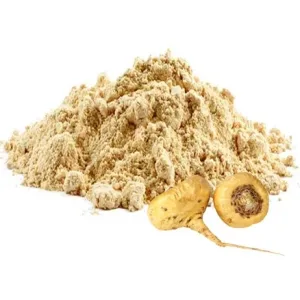
Yellow Maca Powder
The standard harvest phenotype, offering balanced traditional nutritional solids for daily dietary supplementation.
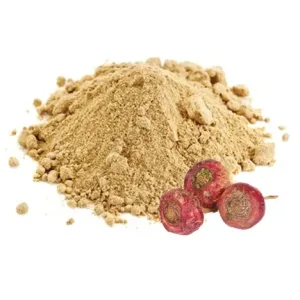
Red Maca Root Powder
Prized for its milder, sweeter flavor profile; predominantly positioned in women’s hormonal balance and vitality lines.
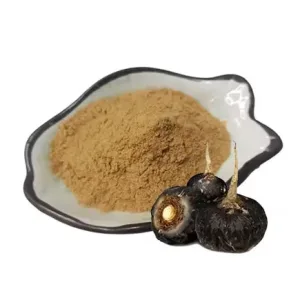
Black Maca Root Powder
Characterized by a more pungent aroma and earthy taste; widely favored for men’s stamina and athletic recovery blends.
What the Color Actually Tells You
Pigmentation differs between root types, as does the sensory profile. Black maca is typically described as the most pungent and red as the mildest—a qualitative sensory observation rather than a chemical specification.
Keeping the Documentation Consistent
A frequent error in multi-color lines is documentation disparity: one SKU arrives with a complete COA, while the next arrives with a brief one-page sheet listing only physical appearance. Define your document specification once and enforce it across all phenotypes to ensure full traceability during retail compliance audits.
What a Bulk Specification Must State
For an extract, the specification must state the marker content, test method, extraction ratio, carrier type/percentage, and organoleptic parameters. For root powder, it must declare mesh size, moisture, total ash, and microbial limits. Both formats require heavy metal limits, pesticide residue compliance, and a complete certificate dossier.
A certificate stating only a ratio is not an assay specification. Neither is a certificate reporting content measured by TLC when the buyer is paying for a standardized extract, because TLC confirms botanical identity rather than quantitative concentration. Request the HPLC chromatogram on your qualifying lot; a qualified botanical manufacturer can readily supply the instrument trace.
Which Parameters Belong on the COA
The COA must specify the lot number, manufacture date, retest date, assay methodology, moisture level, heavy metals (Pb, As, Cd, Hg), complete microbiological profile, and appearance. When purchasing organic material, verify that the organic transaction certificate is traceable to that exact lot number rather than a blanket facility certificate.
What TLC Does Not Tell You
Thin-Layer Chromatography (TLC) provides a characteristic band pattern that verifies species identity and confirms whether a compound class is present. However, TLC cannot quantify whether the macamides sit at 0.6% or 0.2%. When significant price discrepancies exist between supplier quotes that both cite TLC, the variance almost always resides in that unmeasured active gap.
Whether Maca Works Is a Question for the Brand, Not the Purchase Order
Buyers sometimes ask raw material suppliers to validate finished product efficacy. That determination falls outside a manufacturer’s scope. Published clinical reviews of Lepidium meyenii document a wide array of traditional uses and note that human trial evidence remains mixed, often characterized by small cohort sizes and varying preparation protocols across studies. A raw whole-root powder and a 50:1 concentrated extract are not bio-equivalent in a clinical trial, so an efficacy claim established on one preparation cannot be casually transferred to another.
Procurement decisions should be grounded in processing technology, active marker quantification, and regulatory documentation. Label claims and marketing statements belong to the brand, its legal counsel, and the specific clinical dossiers supporting the finished dosage form.
Choosing for Your Format
Capsule brands should evaluate the standardized extract and calibrate tapped density against capsule shell geometry. Gummy and stick-pack formulators should benchmark gelatinized powder for flavor masking and hydration rate. Food developers should begin with raw powder and verify mesh sizing against their existing blending lines. Retailers building color-differentiated lines should source color-sorted powders while demanding identical testing standards across all SKUs.
Capsules and Tablets
Start from the label claim, calculate backward to the active assay, and calibrate fill weight. A 0.6% macamide extract in a 500 mg fill delivers a significantly different active load than the same mass of a 20:1 unstandardized powder; the two cannot share equivalent label claims even if the capsule shells are identical.
Powders, Stick Packs, and Blends
Here, the governing constraints are taste, natural color, and water dispersion. Gelatinized powder streamlines flavor development, raw powder supports whole-food marketing narratives, and a synergistic blend of both is common when formulators seek active markers alongside an authentic root profile.
Ordering, Sampling and Repeatability
Pilot samples from 10 g to 50 g are available for bench formulation, with standard commercial minimum orders starting at 1 kg. Test candidate samples in your actual production matrix before signing a supply contract, as powders that hydrate cleanly in pure water can behave unpredictably in lipid-dense or acidic matrices.
Plan your commercial repeat orders while the initial production batch is still in process: identify the reserve lot, retain sealed reference samples, and cite the agreed specification number directly on the purchase order so that subsequent shipments are validated against documentation rather than memory.
Botanical Cube manufactures and exports maca ingredients directly from its certified extraction facility, issuing comprehensive analytical dossiers for each commercial lot. To request detailed technical specification sheets, HPLC test data, or pilot evaluation samples, please contact the Botanical Cube technical engineering team.
Sources
- Medicinal effects of Peruvian maca (Lepidium meyenii): a review. PMC10910417
- Therapeutic effects of pre-gelatinized maca. PMC3614596
- Botanical Cube maca extract product specification. Maca Extract Powder

Get in Touch
If you have any questions, please contact our experts, we are always ready to help you with individual formulations, private label solutions or any other requirements to kick-start your brand!