 +86-29-87300696




Is Taro And Ube The Same?
August 05
Although taro and ube are often mistaken for each other because of their similar purple appearance and widespread use in desserts, beverages, and bakery products, they are derived from different plants and have unique flavors, nutritional profiles, and functional properties. Understanding the differences between taro and ube allows food manufacturers to choose the most suitable ingredient for product development, especially when formulating naturally colored beverages, desserts, functional foods, and nutritional products.
What Is Taro?
Taro is a tropical root vegetable derived from the plant species Colocasia esculenta. It has been cultivated for thousands of years and is widely consumed in Asia, the Pacific Islands, and Africa. The flesh of taro is typically white or light purple with small purple streaks. After processing, taro powder usually has a soft lavender color rather than a deep purple appearance. Taro has a mild, slightly nutty flavor with a naturally starchy texture. Its taste is often compared to a combination of sweet potato and chestnut.
Applications of Taro
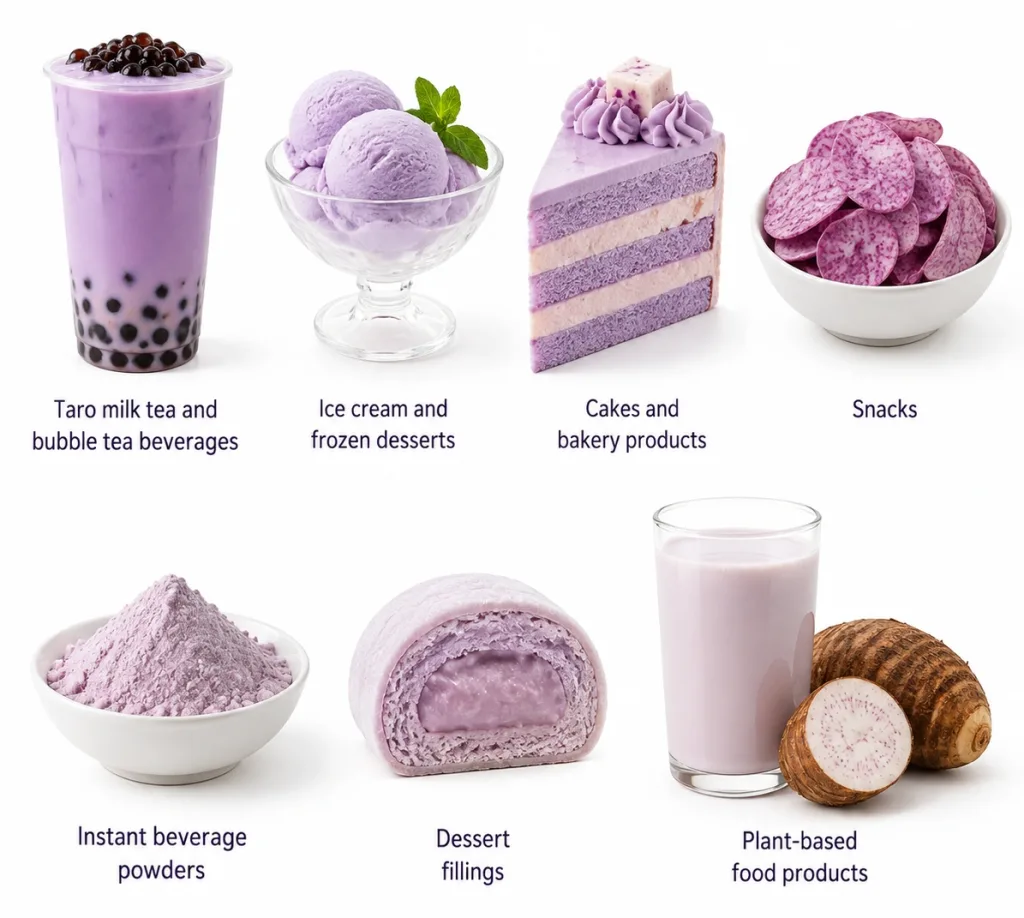
 For manufacturers, taro powder is valued for its creamy texture, mild flavor, and ability to deliver a natural root vegetable taste.
What Is Ube?
Ube is a purple yam native to the Philippines. Its scientific name is Dioscorea alata, and it is also commonly known as purple yam. Unlike taro, ube naturally contains high levels of anthocyanins, which give it its characteristic vibrant purple color. Ube has a naturally sweet flavor with notes of vanilla, coconut, and roasted nuts. Due to its appealing color and unique taste, ube has gained increasing popularity in global food markets.
Applications of Ube

For food brands, ube powder is often selected when a strong natural purple color and premium flavor profile are required.
Taro vs Ube: What Are The Main Differences?
| Feature | Taro | Ube |
| Plant Type | Root vegetable | Purple yam |
| Scientific Name | Colocasia esculenta | Dioscorea alata |
| Origin | Southeast Asia and Pacific regions | Philippines |
| Natural Color | White to light purple | Deep purple |
| Flavor | Mild, nutty, starchy | Sweet, vanilla-like, nutty |
| Main Functional Property | Texture and creamy mouthfeel | Natural purple color and flavor |
| Popular Uses | Bubble tea, desserts, bakery | Premium desserts, beverages, natural coloring |
Both ube and taro can be included in a balanced diet, but they have different nutritional profiles and functional characteristics. Ube contains anthocyanins, natural plant pigments that contribute to its antioxidant properties and vibrant purple color. Taro is known for its carbohydrate content, dietary fiber, and mineral nutrients. It is commonly used as an energy source and a texture-enhancing ingredient in food products. The choice between ube and taro depends mainly on the desired product characteristics: √ Choose ube when you need a natural purple color, premium appearance, and distinctive sweet flavor. √ Choose taro when you need a creamy texture, mild taste, and traditional root vegetable flavor.
Can Taro and Ube Be Used Interchangeably?
Taro and ube can be used in similar applications in some cases, but they are not direct substitutes. For example:
- In a purple beverage, ube can provide a stronger natural purple color.
- In a creamy milk tea formulation, taro can provide a smoother texture and a more neutral flavor.
- In bakery products, ube can create a more visually appealing product with a unique flavor profile.
Replacing one ingredient with the other may affect:
- Color intensity
- Flavor profile
- Product positioning
- Consumer expectations
Food manufacturers should evaluate each ingredient based on their specific formulation goals.
Why Is Ube Becoming Popular in Global Food Applications?
1. Growing Demand for Natural Colors
Consumers are increasingly seeking clean-label products made with natural ingredients. Ube provides an appealing purple color without the need for synthetic colors.
2. Interest in Unique Global Flavors
Ube has gained popularity due to its Filipino heritage and distinctive flavor profile. Many brands use ube to develop differentiated products with unique taste and visual appeal.
3. Expansion of Functional and Premium Foods
Ube is increasingly used in premium desserts, plant-based foods, beverages, and nutritional products, where appearance and ingredient stories play an documented role. Choosing Between Taro Powder and Ube Powder for Your Product For manufacturers developing new food and beverage products, selecting the right powder depends on the specific formulation requirements.
| Choose Taro Powder if you need | Choose Ube Powder if you need |
| √ Creamy texture | √ Natural purple color |
| √ Mild root flavor | √ Sweet and premium flavor |
| √ Traditional Asian dessert applications | √ Clean-label coloring solution |
| √ Beverage and dairy formulations | √ Innovative food and beverage concepts |
Both ingredients offer unique advantages and help brands create attractive products that meet the needs of today’s consumers.
Ube Powder Supplier for Food and Beverage Applications
As consumer demand for natural ingredients continues to grow, purple ube powder has become a popular choice among food manufacturers, beverage brands, and nutritional product companies. We supply ube powder with consistent quality, controlled processing, and customized solutions for various applications, including beverages, bakery products, desserts, and functional foods. With manufacturing capabilities, quality control procedures, and export experience, we support global customers with reliable ingredient supply and customized product solutions. Contact us to discuss your ube yam powder sourcing needs, product specifications, and development requirements.

Get in Touch
If you have any questions, please contact our experts, we are always ready to help you with individual formulations, private label solutions or any other requirements to kick-start your brand!