 +86-29-87300696
 info@botanicalsuppliers.com




 EN
EN CN
CN RU
RUWhy are NMN supplements important?
March 20
As we navigate an era where “living longer” is being replaced by the goal of “living younger,” the conversation inevitably turns to a single, powerful molecule: NMN. At Botanical Cube Inc., we have spent years monitoring the pulse of the global health ingredient market, and we’ve seen few compounds generate as much legitimate scientific excitement and market demand as Nicotinamide Mononucleotide (NMN).
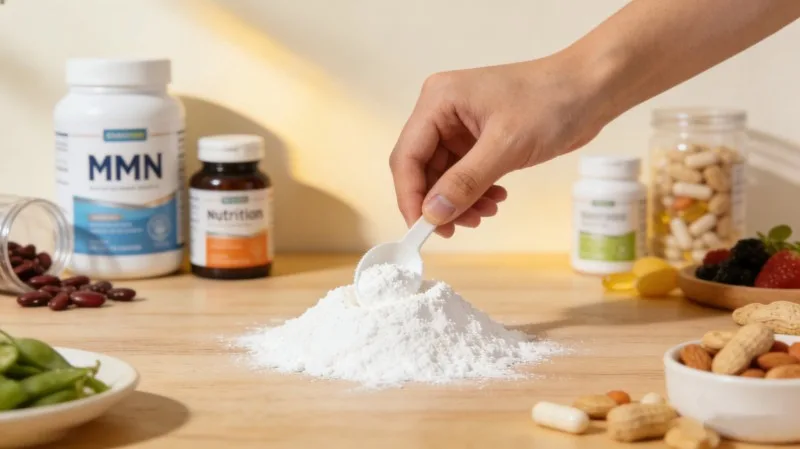
If you are looking to understand why NMN has transitioned from a laboratory curiosity to a global wellness phenomenon, or if you are seeking a reliable partner to supply this high-demand ingredient, this guide is for you.
Why NAD+ Levels Are the True Metric of Vitality
To understand NMN, we first have to talk about NAD+ (Nicotinamide Adenine Dinucleotide). In my discussions with researchers and clients alike, I often describe NAD+ as the “cellular currency.” It is a coenzyme found in every single living cell, and without it, the biological engine simply stops.
1. The Biological Reality of Aging
Aging, at its most fundamental level, is the result of cellular decay. NAD+ plays two critical roles here: it facilitates energy metabolism (turning nutrients into ATP) and acts as a substrate for DNA repair enzymes like PARPs and Sirtuins.
2. The Irreversible Decline
The problem we all face is that NAD+ levels do not stay constant. Research has shown a staggering correlation between age and NAD+ depletion. By the time an average human reaches age 50, their NAD+ levels are approximately 50% of what they were in their 20s. This decline is a primary driver of age-related issues, from decreased metabolic rate to cognitive fog.
3. The NMN Rescue Logic
Naturally, you might ask: “Why not just take NAD+ supplements?” The answer lies in molecular size. NAD+ is a large, “bulky” molecule that struggles to cross cell membranes directly. NMN, however, is a smaller precursor. Think of NMN as the refined fuel that passes easily through the cellular gates, where it is then instantly converted into NAD+ inside the cell. This efficiency is why NMN has become the gold standard for NAD+ restoration.
Four Core Values of NMN in Longevity
When we talk to overseas buyers, they want more than marketing claims; they want hard data. Over the last decade, peer-reviewed studies have illuminated four key areas where NMN provides transformative value.
1. Cellular Energy & Mitochondrial Function
Mitochondria are the power plants of our cells. As we age, these power plants become less efficient, leading to chronic fatigue. A landmark study published in Cell demonstrated that NMN supplementation can “rejuvenate” mitochondrial function in older subjects to levels resembling much younger tissue. In practical terms, this translates to improved physical endurance and reduced systemic exhaustion.
2. DNA Damage Repair
Our DNA is under constant attack from environmental stressors and oxidative waste. Sirtuins, often called “longevity genes,” require NAD+ to function. By boosting NAD+ via NMN, we effectively “turn on” these guardians of the genome, allowing them to repair broken DNA strands and maintain cellular identity.
3. Metabolic & Cardiovascular Support
Cardiovascular health is perhaps where the most exciting human clinical data is emerging. In a 2023 study, researchers found that NMN supplementation significantly improved vascular stiffness and improved insulin sensitivity in mid-life adults. For our business clients in the functional food sector, this data is vital for positioning NMN as a preventative metabolic aid.
4. Cognitive & Neuroprotection
The blood-brain barrier is notoriously difficult to navigate, but NMN has shown the ability to cross and support neuronal health. By reducing oxidative stress in the brain, NMN helps maintain synaptic plasticity—essentially keeping the “wiring” of the brain sharp as we age.
Global NMN Growth Analysis (2024–2030)
As a specialist at Botanical Cube Inc., I don’t just look at the science; I look at the numbers. The global appetite for NMN is not just a trend—it is a structural shift in the supplement industry.
1. Market Projections
The global NMN market was valued significantly in 2023 and is projected to reach approximately $2.79 billion by 2031. This represents a Compound Annual Growth Rate (CAGR) of over 10.9%. This growth is fueled by an aging global population and a shift toward “proactive” healthcare.
2. Regional Demand Breakdown
- North America: Currently holds about 42% of the global market share. Buyers here are highly sophisticated; they demand pure powder, clinical backing, and total transparency.
- Europe & Asia-Pacific: We are seeing explosive growth in Germany, the UK, and Southeast Asia. In these regions, the focus is on “clean label” products and preventive medicine.
3. The Shift to Pure Powder
We’ve noticed a major shift in how brands order NMN. While capsules were once king, professional brand owners are now pivoting toward Pure NMN Powder. This allows for custom formulations—mixing NMN with Resveratrol, PQQ, or Ergothioneine—to create unique “longevity stacks” that stand out in a crowded market.
Industry Standards: Defining High-Quality NMN
Not all NMN is created equal. In the business world, quality isn’t a “premium” feature; it’s the baseline. If you are sourcing NMN, these are the criteria we believe you must demand:
1. Purity and Stability (99%+)
Anything less than 99% purity is unacceptable for international markets. Low-purity NMN often contains residues from chemical solvents or unreacted precursors. At Botanical Cube Inc., we prioritize stability testing to ensure the powder doesn’t degrade during overseas shipping or while sitting on a warehouse shelf.
2. Enzymatic Synthesis vs. Chemical Synthesis
This is a critical distinction. Chemical synthesis is often cheaper but can leave behind unwanted chemical traces. We advocate for Enzymatic Synthesis. This “green” biology method mimics how the body produces NMN, resulting in a more bio-active, natural-aligned product that resonates with eco-conscious consumers.
3. Third-Party Verification
Trust is built through data. High-quality NMN must be accompanied by:
- COA (Certificate of Analysis): Detailing purity and moisture content.
- HPLC Testing: To verify the exact molecular identity.
- Heavy Metal & Microbial Reports: Ensuring safety for food-grade applications.
Botanical Cube Inc.: Your Partner in Longevity
We don’t just supply ingredients; we provide the foundation for your brand’s success. Since our establishment in 2008, Botanical Cube Inc. has focused on the intersection of nature and science.
1. Our NMN Powder Advantage
Our NMN is characterized by its exceptional solubility and neutral taste, making it perfect for everything from standard capsules to innovative functional beverages. Because we use advanced enzymatic processes, our powder offers a level of bioavailability that satisfies the most rigorous international standards.
2. Reliable Supply Chain
We understand the frustration of supply chain disruptions. With our established production lines, we offer stable monthly output and competitive B2B pricing that allows your brand to maintain healthy margins while offering premium quality to your customers.
3. Transparency You Can Trace
Every batch we ship comes with full documentation. We believe in “data-driven partnership.” When you work with us, you aren’t just getting a bag of powder; you’re getting the peace of mind that comes with verified scientific literature and rigorous quality control.
Conclusion: Let’s Shape the Future of Longevity Together
The NMN market is no longer in its infancy—it has matured into a cornerstone of the global longevity economy. As consumer awareness grows, the window for brands to establish themselves as leaders in this space is wide open.
However, success in this market requires more than just a product; it requires a strategy. You need a partner who understands the science, the shifting market data, and the importance of “human-centric” quality. Whether you are looking to launch a new longevity line or optimize your existing formulas, we are here to help you navigate the complexities of the NMN landscape.
The market for cellular health is moving fast. We invite you to reach out to us for detailed product specifications, custom formulation advice, or to request samples of our high-purity NMN powder.
Let’s build a future where aging is an option, not a limitation. Contact Us Today info@botanicalsuppliers.com.
References
[1] Imai, S., & Guarente, L. (2014). “NAD+ and sirtuins in aging and disease.” Trends in Cell Biology, 24(8), 464-471. (Focus: The essential role of NAD+ in activating Sirtuins for DNA repair and cellular maintenance).
[2] Massudi, H., et al. (2012). “Age-associated changes in oxidative stress and NAD+ metabolism in human tissue.” PLoS ONE, 7(7), e42357. (Focus: Clinical data showing NAD+ levels in human skin and organs decline by approximately 50% between age 20 and 50).
[3] Grozio, A., et al. (2019). “Slc12a8 is a nicotinamide mononucleotide transporter.” Nature Metabolism, 1(1), 47-57. (Focus: Discovery of the specific transporter that allows NMN to be directly and efficiently absorbed into cells).
[4] Gomes, A. P., et al. (2013). “Declining NAD+ induces a pseudohypoxic state disrupting nuclear-mitochondrial communication during aging.” Cell, 155(7), 1624-1638. (Focus: Demonstrating that restoring NAD+ levels via precursors can reverse mitochondrial dysfunction in aged muscle).
[5] Li, J., et al. (2017). “A conserved NAD+ binding pocket that regulates protein-protein interactions during aging.” Science, 355(6331), 1312-1317. (Focus: Molecular evidence of how NAD+ restoration directly assists PARP1 in repairing DNA damage).
[6] Yi, L., et al. (2023). “The efficacy and safety of beta-nicotinamide mononucleotide (NMN) supplementation in healthy middle-aged adults: a randomized, multicenter, double-blind, placebo-controlled, parallel-group, dose-dependent clinical trial.” GeroScience, 45(1), 29-43.
[7] Kiss, T., et al. (2019). “Nicotinamide mononucleotide (NMN) supplementation promotes anti-aging miRNA expression profile in the cerebral arteries of aged mice.” GeroScience, 41(4), 419-439.
[8] Grand View Research (2024). “Nicotinamide Mononucleotide (NMN) Market Size, Share & Trends Analysis Report By Application, By Region, And Segment Forecasts, 2024 – 2030.”
[9] Botanical Cube Inc. Technical Operations (2026). “Comparative Analysis of Enzymatic Synthesis vs. Chemical Catalysis in High-Purity NMN Production.” Internal Quality Control White Paper.

Get in Touch
If you have any questions, please contact our experts, we are always ready to help you with individual formulations, private label solutions or any other requirements to kick-start your brand!