 +86-29-87300696




Ginger Powder vs. Ginger Extract: What’s the Difference?
November 24
Ginger powder and ginger extract are both derived from the rhizome of Zingiber officinale, but they differ in processing methods, composition, gingerol content, and applications.
WHOLE-PLANT MATERIALGinger powder is made by drying and milling ginger rhizomes, retaining their natural flavor and aroma.
CONCENTRATED & STANDARDIZEDGinger extract undergoes further processing to obtain concentrated botanical constituents and can be standardized to specific gingerol levels.
For food manufacturers, ginger powder is often preferred for its natural taste and aroma. For dietary supplement manufacturers, standardized ginger extract offers greater control over gingerol content and formulation specifications.
At Botanical Cube, we supply ginger extract in multiple specifications, including water-soluble 1% Gingerols and conventional 5%, 10%, and 20% Gingerols grades for commercial ingredient applications.
Ginger Powder vs. Ginger Extract: Key Differences
The main difference is how the two ingredients are processed and specified.
Ginger powder is ground from dried ginger rhizomes, whereas ginger extract is obtained through extraction and further processing. As a result, their composition, gingerol content, and suitability for different formulations can vary considerably.
Although both ingredients come from the same botanical source, they are not interchangeable in every formulation.
| Comparison | Ginger Powder | Ginger Extract |
 |
 |
|
| Botanical Source | Zingiber officinale rhizome | Zingiber officinale rhizome |
| Processing | Drying and milling | Extraction, concentration, and drying |
| Composition | Whole-plant ginger material | Concentrated botanical constituents |
| Gingerol Content | Naturally occurring, generally not standardized | Available in defined specifications |
| Appearance | Yellowish to light brown powder | Varies by specification |
| Solubility | Generally disperses rather than fully dissolves | Depends on the grade and processing |
| Flavor | Natural ginger taste and aroma | Depends on concentration and processing |
| Main Applications | Seasonings, bakery, beverages, and food blends | Dietary supplements and selected functional formulations |
| Purchasing Focus | Particle size, flavor, and raw material quality | Gingerol content, solubility, and COA |
How Are Ginger Powder and Ginger Extract Manufactured?
The manufacturing process is one of the main reasons these two ingredients have different properties.
ROUTE 01 / MECHANICAL
Ginger Powder: Drying and Milling
Ginger powder is produced by processing cleaned and dried ginger rhizomes into a fine powder.
- Selection and inspection of ginger rhizomes.
- Cleaning and raw material preparation.
- Drying under controlled conditions.
- Milling to the required particle size.
- Sieving and quality inspection.
- Packaging for commercial supply.
The finished product retains the characteristic flavor, aroma, and composition of ginger.
ROUTE 02 / SC-CO₂ EXTRACTION
Ginger Extract: Extraction and Standardization
Ginger extract requires additional processing to obtain concentrated botanical constituents.
Botanical Cube uses supercritical CO2 (SC-CO2) extraction technology in its ginger extract production, with ginger rhizomes as the botanical raw material.
SC-CO2 extraction has also been studied in scientific research concerning the recovery of gingerols and other ginger constituents.
Following extraction, further processing and quality control help achieve the required product specifications.
- Gingerol content and analytical method.
- Appearance and powder characteristics.
- Moisture content.
- Solubility and dispersibility.
- Heavy metal limits.
- Pesticide residue limits.
- Microbiological specifications.

Which Ingredient Is Better for Different Applications?
Neither ingredient is universally better. The right choice depends on the finished product and its formulation requirements.
01
Ginger Powder for Food and Seasoning Manufacturing
Ginger powder is a practical option when natural ginger flavor and aroma are important.
- Seasoning blends.
- Bakery products.
- Sauces and condiments.
- Food ingredient blends.
- Ginger-flavored powdered products.
- Food and beverage formulations.
Its whole-plant characteristics make it suitable for products where the recognizable taste of ginger is part of the finished product.
Manufacturers should consider particle size, moisture, color, and flavor consistency when selecting a ginger powder supplier.
02
Ginger Extract for Dietary Supplements
Standardized ginger root extract is generally preferred when a formulation requires a defined gingerol content.
- Capsules.
- Tablets.
- Botanical supplement blends.
- Powdered supplement formulations.
- Multi-ingredient botanical products.
For example, a supplement manufacturer developing a product with a specified gingerol content may select 5% or 10% Gingerols extract rather than ordinary ginger powder.
The declared gingerol percentage provides a clearer basis for formulation calculations and batch specifications.
03
Water-Soluble Ginger Extract for Liquid Formulations
Solubility is an important consideration for manufacturers developing liquid and water-based products.
Ordinary ginger powder may leave suspended particles or sediment in water. Conventional ginger extracts should also not be assumed to dissolve completely in cold water.
For applications requiring better compatibility with aqueous systems, a dedicated water-soluble ginger extract may be a more appropriate choice.
- Dissolution and dispersion behavior.
- Solution clarity and color.
- Sedimentation.
- Flavor and taste.
- pH compatibility.
- Stability during storage.
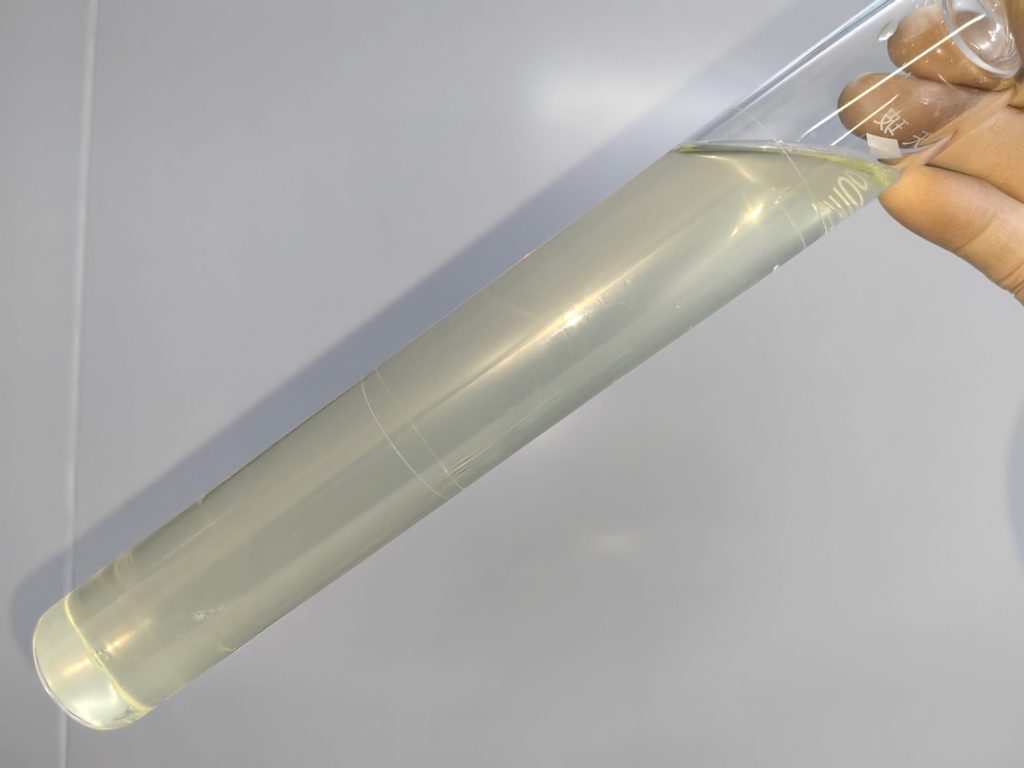
Understanding Gingerol Specifications in Ginger Extract
Gingerols are naturally occurring pungent compounds in ginger and are among the main constituents used to characterize standardized ginger extracts.
For bulk ingredient buyers, gingerol content is an important part of the product specification.
Botanical Cube supplies the following ginger extract grades:
Water-SolubleGingerols · Aqueous formulations and liquid product development.
ConventionalGingerols · Standardized botanical formulations.
ConventionalGingerols · Higher gingerol specification.
ConventionalGingerols · More concentrated gingerol specifications.
How to Verify Gingerol Content
When comparing ginger extract suppliers, buyers should request a Certificate of Analysis (COA) to verify the declared gingerol content.
HPLC analysis can be used to determine gingerol content according to the applicable analytical method.
Buyers should also confirm that the analytical method and reported results are appropriate for the agreed product specification.
Why Source Ginger Extract from Botanical Cube?
Botanical Cube is a China-based botanical ingredient manufacturer and supplier, serving ingredient distributors, importers, food manufacturers, and dietary supplement companies.
We focus on standardized botanical ingredients, quality documentation, and commercial bulk supply.
01 / SPECIFICATIONS
Multiple Gingerol Specifications
Our available ginger extract grades include:
- Water-Soluble 1% Gingerols.
- Conventional 5% Gingerols.
- Conventional 10% Gingerols.
- Conventional 20% Gingerols.
This range gives manufacturers more flexibility when selecting ingredients for different formulation requirements.
02 / TECHNOLOGY
SC-CO₂ Extraction Technology
Our ginger extract production uses supercritical CO2 extraction technology, with ginger rhizomes as the botanical raw material.
Production and quality control are managed according to the agreed product specifications.
03 / QUALITY & TESTING
Quality Management and Testing
Our quality management credentials include:
- FSSC 22000.
- cGMP.
- Kosher.
- Halal.
Depending on the product grade and customer requirements, available quality documentation can include:
- Product Specification Sheet.
- Batch Certificate of Analysis (COA).
- HPLC analytical results.
- Heavy metal testing.
- Pesticide residue testing.
- Microbiological testing.
Third-party testing through laboratories such as SGS or Eurofins can also be arranged according to agreed testing requirements.
04 / B2B SERVICES
Bulk Supply and OEM/ODM Support
We work with:
- Dietary supplement manufacturers.
- Botanical ingredient distributors.
- Food ingredient companies.
- Importers and wholesalers.
- Contract manufacturers.
- Private-label brands.
Our commercial services include bulk ingredient supply, customized packaging, OEM/ODM support, and product specification discussions.
Production schedules, order quantities, and delivery arrangements can be discussed according to individual purchasing requirements.
Frequently Asked Questions About Ginger Powder and Ginger Extract
Q1. Is ginger extract stronger than ginger powder?
Standardized ginger extract generally has a more concentrated and defined gingerol specification than ordinary ginger powder. The actual difference depends on the extract grade and the original ginger material.
Q2. Can ginger powder replace ginger extract?
Not in every formulation. Ginger powder is suitable when whole-plant ginger material and natural flavor are required. Standardized ginger extract is generally more suitable when a defined gingerol content is needed.
Q3. Does all ginger extract dissolve in water?
No. Solubility depends on the processing method and product specification. Buyers developing water-based products should request a dedicated water-soluble grade and confirm its performance through testing.
Q4. What is the difference between 5% and 10% Gingerols?
The percentages refer to the declared gingerol content. A 10% Gingerols extract has a higher gingerol concentration than a 5% grade, provided both are tested using comparable analytical methods.
Q5. What ginger extract specifications does Botanical Cube supply?
We supply water-soluble 1% Gingerols and conventional 5%, 10%, and 20% Gingerols ginger extract for commercial applications.
Q6. What quality documents are available for bulk ginger extract?
Available documents may include a product specification sheet, batch COA, HPLC analysis, and relevant quality and safety testing reports. Documentation can be confirmed according to the product grade and destination market.
Q7. Can Botanical Cube provide customized packaging and OEM/ODM services?
Yes. We offer bulk packaging and customized packaging arrangements based on order quantities and customer requirements. OEM/ODM and private-label services can also be discussed.
Ginger Powder or Ginger Extract: Which Should You Choose?
Ginger powder and ginger extract serve different purposes in commercial manufacturing.
01Choose ginger powder when natural ginger flavor, aroma, and whole-plant material are the priorities.
02Choose standardized ginger extract when your formulation requires a defined gingerol content.
03Choose water-soluble ginger extract when compatibility with aqueous formulations is an important requirement.
The best ingredient depends on the finished product, formulation requirements, and agreed quality specifications.
Looking for a Reliable Bulk Ginger Extract Supplier?
Botanical Cube supplies water-soluble 1% and conventional 5%, 10%, and 20% Gingerols ginger extract for commercial manufacturing.
We can support specification discussions, COA documentation, sample requests, bulk orders, and customized packaging.
Contact our team to discuss your ginger extract requirements.
References
- Supercritical CO₂ Extraction of Oleoresin from Peruvian Ginger (2025)
https://pmc.ncbi.nlm.nih.gov/articles/PMC11901477/ - Supercritical CO₂ Extraction and Online Fractionation of Dry Ginger (2019)
https://www.sciencedirect.com/science/article/abs/pii/S0926669019300056 - Extraction of Ginger Rhizome: Kinetic Studies with Supercritical Carbon Dioxide (1990)
https://academic.oup.com/ijfst/article/25/3/328/7867437

Get in Touch
If you have any questions, please contact our experts, we are always ready to help you with individual formulations, private label solutions or any other requirements to kick-start your brand!