 +86-29-87300696




Ginger Root Extract and Its Active Compounds
October 30
Ginger root extract is a concentrated preparation of the rhizome of Zingiber officinale, standardized on the pungent phenolic compounds that give the root its character. The two families that matter are gingerols, which dominate the fresh rhizome, and shogaols, which form when it is dried or heated. Understanding the relationship between them explains most of what makes one ginger ingredient different from another.
The phenolic fraction accounts for the pungency, and its composition is set by the drying and extraction steps rather than by the plant alone. That is why two preparations carrying the same name can behave differently in the same formulation.
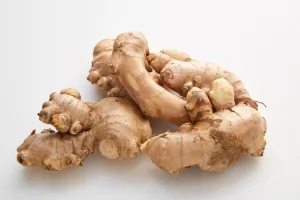
What Ginger Root Extract Contains
The rhizome contains a complex matrix of phenolic and terpene compounds rather than a single active substance. The phenolics carry the signature pungency, and they represent the primary fraction on which an extract is commercially standardized.
Gingerols
The pungent phenolics that dominate the fresh rhizome, with 6-gingerol being the most abundant and well-characterized constituent.
Shogaols
The dehydrated forms that increase substantially during drying and thermal processing, with 6-shogaol being the most widely studied.
Paradols
A closely related bioactive group formed under similar thermal and oxidative conditions during post-harvest handling.
Zingerone
Produced when gingerols undergo retro-aldol degradation under sustained thermal processing, imparting a milder, sweet aroma.
Minor Phenolics
Secondary polyphenols including quercetin and gingerenone-A, present in smaller quantities that support overall antioxidant capacity.
Terpene Fraction
Volatile essential oils (such as zingiberene and bisabolene) that provide characteristic aroma and flavor rather than pungency.
The chemical profile shifts according to raw material sourcing and extraction parameters rather than remaining static. Fresh rhizomes are dominated by gingerols, whereas dried rhizomes contain significantly elevated shogaol levels because drying facilitates thermal conversion. Consequently, two extracts sold under the same trade name can differ substantially in their gingerol-to-shogaol ratio.
A review of the rhizome’s chemistry lists the phenolic and terpene constituents together with the conditions under which each forms, providing the scientific foundation for the breakdown detailed above.
Gingerols and Shogaols: The Thermal Dynamic
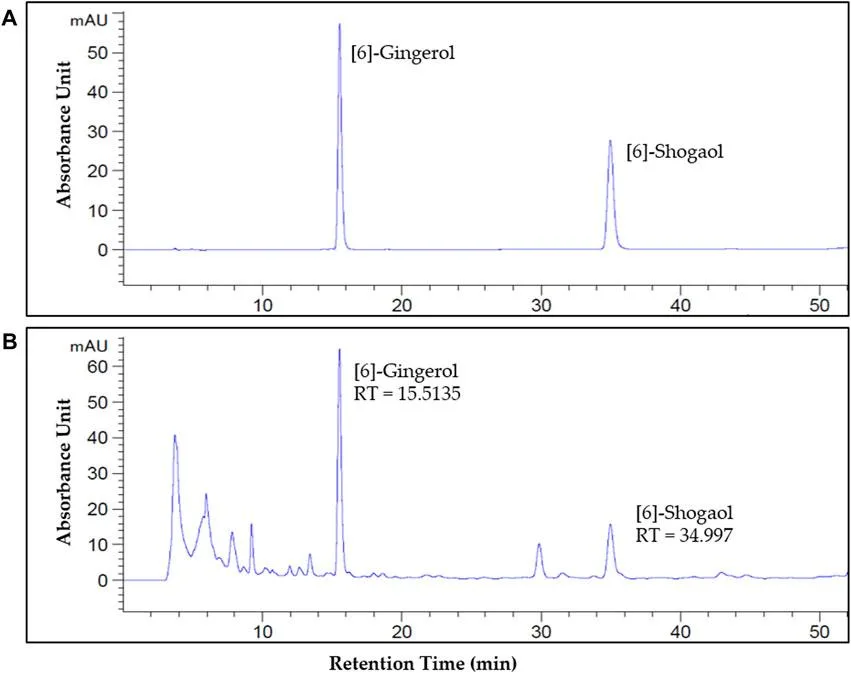
Gingerols are thermally unstable and undergo dehydration into shogaols when the rhizome is dried or heated. That single reaction explains why fresh ginger and dried ginger taste distinctly different and why their analytical chromatography profiles diverge.
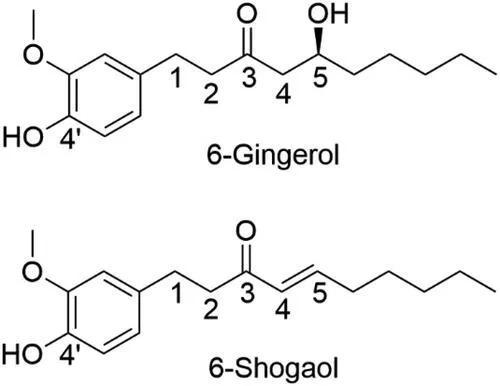
The Conversion Pathway
The transformation is a dehydration reaction that proceeds further as processing temperature and dwell time increase. In a subcritical water extraction study, peak yields reached 0.68 mg per gram of 6-gingerol and 0.39 mg per gram of 6-shogaol under differing thermal parameters. The shogaol yield climbed with elevated temperature and prolonged exposure as 6-gingerol converted into it, confirming that the finished active profile is governed by process engineering rather than crop genetics alone.
Every manufacturing decision produces a distinct compositional consequence: a gentle, low-temperature extraction preserves natural gingerols, while hotter processing concentrates shogaols. Neither profile is inherently superior; each serves distinct formulation objectives.
How They Differ in Bioactive Potency
Direct comparisons of the four primary compounds evaluated radical scavenging capacities in micromolar terms. Against the DPPH radical, the half-maximal inhibitory concentrations (IC50) were 26.3 µM for 6-gingerol, 19.47 µM for 8-gingerol, 10.47 µM for 10-gingerol, and 8.05 µM for 6-shogaol. Against the superoxide radical, the series measured 4.05, 2.50, 1.68, and 0.85 µM, and against the hydroxyl radical, 4.62, 1.97, 1.35, and 0.72 µM, respectively. Because lower values indicate greater radical scavenging potency, 6-shogaol demonstrated the highest efficiency in all three laboratory assays.
These findings are documented in research on gingerol and shogaol antioxidant mechanisms and summarized in academic overviews of ginger principles. These metrics reflect cell-free in vitro environments; in vitro potency does not correlate directly to human physiological outcomes, and careful regulatory substantiation is essential when making consumer claims.
Why an Extract Rather Than Ginger Powder?
Milled powder and concentrated extract represent fundamentally different raw material categories. The selection depends on target dosage constraints, flavor impact, and label claims rather than simple ingredient strength.
| Consideration | Ginger Powder | Ginger Root Extract |
|---|---|---|
| What It Is | Dried, pulverized whole rhizome | Concentrated, solvent-extracted phenolic fraction |
| Ingredient Strength | Fluctuates with raw agricultural crop | Standardized to declared active marker percentage |
| Batch Consistency | Subject to climate and seasonal variance | Tight batch-to-batch specification control |
| Typical Application | Food products, culinary blends, bulk capsules | High-potency nutraceuticals with precise dosing |
| Sensory Impact | Delivers intense aroma, fiber, and pungent taste | Can be selected for reduced flavor impact |
| Cost per Active Unit | Lower per kilogram of raw biomass | Higher per kilogram, lower per active milligram |
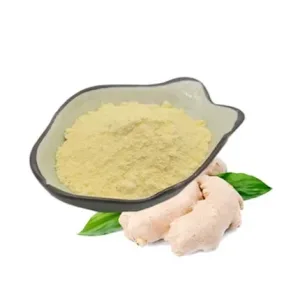
Ginger Powder
Ideal for whole-food functional beverages, culinary seasonings, and bulk powder blends where natural fiber and raw sensory aroma are desired.
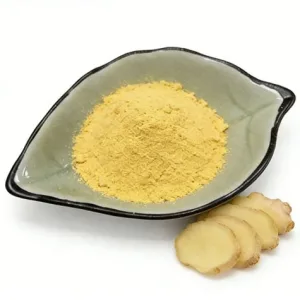
Ginger Root Extract
Engineered for high-potency capsules, clean-label tablets, and dietary supplements requiring verified HPLC marker quantification per dose.
The decisive differentiator is consistency. A dietary formulation making a quantified gingerol claim per serving cannot rely on unstandardized powder because seasonal botanical variance compromises label accuracy. When an ingredient is utilized primarily for flavoring, culinary powder provides the more cost-effective option.
What the Research Establishes
Published literature on Zingiber officinale divides into three distinct evidence tiers that carry differing regulatory weight:
In Vitro Cellular Assays
Extensive, consistent laboratory models demonstrating antioxidant radical scavenging and inflammatory signaling modulation.
In Vivo Animal Models
Numerous disease-state studies that provide mechanistic insight but vary widely in dosage ranges, preparation methods, and study design.
Human Clinical Trials
Fewer in number, highly targeted toward specific clinical endpoints such as gastric comfort and joint mobility.
The published literature supports measurable biological activity for isolated gingerols and shogaols in laboratory assays, paired with clinical trial data concentrated on a discrete group of endpoints. Broader systemic claims are not supported by peer-reviewed evidence. Maintaining a clear distinction between in vitro data and clinical reality is necessary for compliant dietary supplement marketing.
How the Compounds Behave in a Formulation
Both gingerols and shogaols are sensitive to thermal stress, UV light exposure, and oxidation. Protecting raw material integrity requires strict manufacturing controls to prevent active degradation before the product reaches the consumer:
Thermal Moderation
Minimizing prolonged heat exposure during tablet compression, encapsulation, and packaging to prevent unwanted conversion or active breakdown.
Barrier Packaging
Utilizing moisture-resistant, opaque amber or foil packaging to shield the phenolic compounds from photo-oxidation and humidity.
Form Selection
Matching liquid extracts or free-flowing standardized powders to the finished delivery matrix to optimize dissolution and mouthfeel.
Standardization and Marker Compounds
A standardized botanical extract is defined by an analytical assay rather than an extraction ratio. The commercial specification establishes a target marker compound, declares its concentration, and releases each batch against that threshold.
Commercial ginger is routinely standardized on total gingerols, with 6-gingerol quantified individually. Extracts standardized to 5% or 10% total gingerols differ by a factor of two in marker concentration, and their secondary phenolic profiles may vary depending on raw root preparation.
Fixing total gingerols establishes the pungent fraction, but it does not fix shogaol content—the compound demonstrating superior radical scavenging in laboratory tests. A technical specification must explicitly define the markers most critical to the product’s performance.
What a Rigorous Specification Must Fix
A complete commercial specification must define: declared marker compounds (expressed as a percentage or mg/g); the ratio between gingerols and shogaols; the extraction solvent system; residual solvent thresholds; and destination-market limits for heavy metals and microbiology.
The analytical methodology is as critical as the target concentration. High-Performance Liquid Chromatography (HPLC) remains the industry gold standard and must be validated for the specific target gingerols rather than generalized across the total phenolic pool.
Why Raw Agricultural Material Varies
Zingiber officinale is cultivated across varied soils, altitudes, and harvest maturity stages. Cultivars such as red ginger (Zingiber officinale var. rubrum) possess distinct phytochemical fingerprints rather than simple cosmetic differences.
Geographic origin, harvesting season, and post-harvest drying collectively influence raw potency. A standardized extract balances these agricultural fluctuations by adjusting extraction and blending parameters to deliver batch-to-batch uniformity.
Where This Leaves the Ingredient
Ginger root extract is a versatile, standardized botanical ingredient whose performance is governed by the equilibrium between gingerols and shogaols. Because that ratio is determined by extraction and drying parameters rather than nature alone, ingredients sharing the same botanical name can behave differently in production. Select whole powder or standardized extract based on required dosage precision, and align the active profile with your target delivery format.
Botanical Cube manufactures and exports high-purity ginger root extracts and milled ginger powders with verified HPLC testing dossiers. For technical specifications, batch documentation, or evaluation samples, please contact the Botanical Cube technical team.

Get in Touch
If you have any questions, please contact our experts, we are always ready to help you with individual formulations, private label solutions or any other requirements to kick-start your brand!