 +86-29-87300696




Fisetin in Foods and Why Extracts Exist
October 28
Fisetin is a flavonol found across a range of fruits and vegetables, and it is present in ordinary food rather than only in supplements. The amounts are small and they vary widely between sources, which is the starting point for understanding why a standardized extract exists at all.
The gap between the amount present in a serving of food and the amount a standardized extract delivers is wider than most sources imply, and it is what the following sections examine.
What Fisetin Is
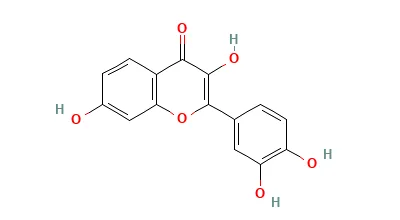
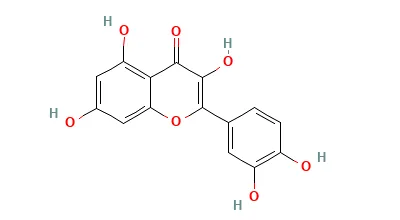
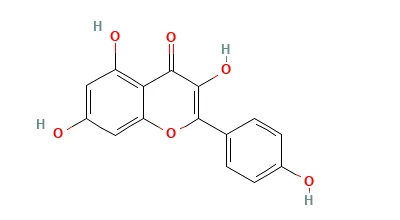
Fisetin is a flavonol, one of the subclasses of flavonoids, which places it alongside quercetin and kaempferol. It shares their basic structure and differs in the arrangement of hydroxyl groups, which is what gives it a distinct profile.
Widely Distributed in Plants
Flavonoids are produced in response to light and other stresses, so their concentration in plant tissue reflects growing conditions as much as species. The same species grown in two places does not deliver the same amount, which is why food composition figures are presented as a range.

Light Exposure

Cultivar Differences

Growing Region

Ripeness Harvest Time

Storage Conditions

Analytical Methods
What an Extract Changes
An extract changes the concentration and the consistency, and it changes nothing else. It does not make a compound more effective, and it does not turn a minor dietary flavonoid into a different substance.
Two things an extract does provide are worth stating plainly: a defined quantity, so that a product can declare what it delivers, and a consistency between batches that whole food cannot offer because food naturally varies.
| Property | Food Source | Standardized Extract |
|---|---|---|
| Concentration | Low, measured in micrograms per gram | Raised by orders of magnitude |
| Consistency | Varies by cultivar, season, and origin | Assayed to a declared figure |
| Form | Part of a mixed matrix | An isolated or concentrated fraction |
| Nutritional context | Accompanied by fiber, water, and other compounds | Reduced to the compound of interest |
| Traceability | Food supply chain | Raw material specification and assay |
The last row is the one that matters for formulation rather than for nutrition. A declared quantity requires an assay, and an assay requires a specification, which is why the extract form exists in manufacturing even where the food form is more familiar.
The concentrated material used for that purpose appears as fisetin from Cotinus coggygria.
What the Research Looks At
Most of the recent interest in fisetin concerns its activity on senescent cells, a line of work that belongs to the compound rather than to the foods containing it. The distinction between the two is the one most often lost when the compound is discussed.
Senescent cells stop dividing but remain metabolically active, and they accumulate with age. Compounds described as senolytic are studied for their ability to clear them selectively, and fisetin is among those examined.
How Far the Work Has Reached
The work spans laboratory studies, animal models, and a limited number of early human studies. Each stage answers a narrower question than the one before it, and the human stage is by far the smallest.
Read as a whole, the field is investigating a mechanism rather than reporting an established intervention. A compound being studied for an activity is not the same as an activity being demonstrated in people.
Why the Food Comparison Does Not Follow
A finding about a compound given at a defined dose does not transfer to a food containing the same compound at a fraction of that dose. The two situations differ in amount, in form, and in what accompanies the compound in the gut.
Fisetin Among the Flavonoids
Fisetin’s position in the literature is more modest than its current visibility suggests. Within the flavonols, it is less studied than quercetin, and its dietary contribution is smaller than quercetin’s in most diets.
What distinguishes it is the specific line of research it became attached to rather than any property unique to the molecule. That is a common pattern in botanical chemistry: a compound’s profile rises with the research question it happens to answer.
Understanding it that way keeps the claims proportionate. Fisetin is one flavonol among many, present in ordinary food at low levels, and studied for an activity that remains under investigation.
Where the Evidence Points
Fisetin occurs in common foods at low and variable concentrations, and it belongs to a flavonoid group whose members are produced in small amounts by plants for their own purposes. An extract raises the concentration and delivers a declared quantity, which is a manufacturing requirement rather than a claim about effect. The research interest sits with the isolated compound and is still at an early stage in human work. Keep the food, the compound, and the research question separate, because almost every overstated claim about fisetin comes from merging the three.
Botanical Cube provides high-purity, batch-tested botanical extracts for nutraceutical and functional food applications. Learn more about our product catalog or contact our team for full specification sheets and bulk pricing.

Get in Touch
If you have any questions, please contact our experts, we are always ready to help you with individual formulations, private label solutions or any other requirements to kick-start your brand!