 +86-29-87300696







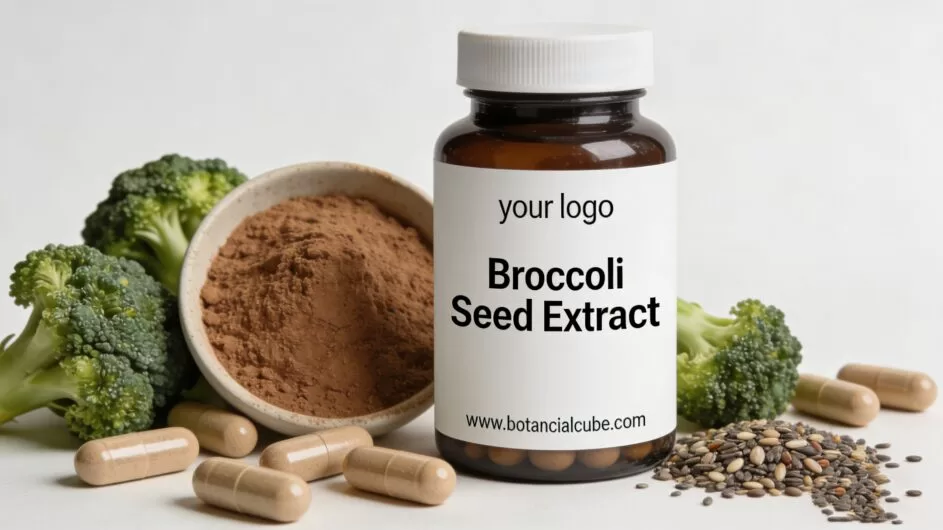
Broccoli Seed Extract
Active Ingredient: Glucoraphanin,Sulforaphane
Specification :1%-13% Glucoraphanin,0.1%-98%Sulforaphane
Appearance: Light yellow-brown fine powder
Extraction Part: Seeds
Test Method: HPLC
Sample: 10-50g Sample For free
MOQ: 1kg
Solubility: 100% water soluble without impurities
Certificate: ISO22000, Kosher, Halal, Organic(EU), USDA, FSSC 22000, FDA,SGS
Broccoli Seed Extract Rich in Glucoraphanin & Sulforaphane
Broccoli Seed Extract, also known as Broccoli Sprout Extract, Glucoraphanin Extract, or Sulforaphane Broccoli Extract, is a highly concentrated botanical ingredient derived from broccoli seeds, where bioactive compounds occur at significantly higher levels than in mature broccoli. Due to its strong scientific backing and clear functional positioning, this extract has become a core raw material in dietary supplements, functional foods, and preventive health formulations.
Key Active Compounds Explained
1. Glucoraphanin
Glucoraphanin is a naturally occurring glucosinolate found abundantly in broccoli seeds. On its own, it is a stable precursor compound, which makes it ideal for formulation and storage. When activated by the enzyme myrosinase (either added during formulation or provided by gut microbiota), glucoraphanin converts into sulforaphane.
2. Sulforaphane
Sulforaphane is the biologically active isothiocyanate responsible for most of the extract’s health benefits. It is widely studied for its role in cellular detoxification pathways (Nrf2 activation), antioxidant defense, and metabolic support. Due to its sensitivity to heat and processing, sulforaphane content and stability are key quality indicators in the market.
Current Market Landscape
In today’s market, Broccoli Seed Extract with standardized glucoraphanin or sulforaphane content is in strong demand, especially within the anti-aging, detox, liver support, and cellular health segments. Compared to broccoli powder or generic vegetable extracts, seed-based extracts are preferred for their higher potency, lower dosage requirements, and clearer labeling claims, making them more suitable for premium supplement brands.
Our Product Advantage & OEM Value
We focus on broccoli seeds as the primary raw material, ensuring naturally high glucoraphanin levels.For sulforaphane-focused applications, we support conversion-oriented solutions, including compatibility with myrosinase systems and formulation guidance to help improve bioavailability. Rather than offering a one-size-fits-all extract, we help partners build market-ready broccoli seed extract products with clear functional logic,stable performance, and scalable production.
Why Our Broccoli Seed Extract?
1. High and Verified Active Profile
We supply extracts with standardized glucoraphanin concentrations up to industry‑leading levels (e.g., 13–20% or higher) and controlled sulforaphane where required, with third‑party HPLC verification for each batch.
2. Superior Stability & Processing Performance
Sulforaphane itself is chemically unstable and degrades rapidly unless properly managed; Our proprietary processing and formulation protocols significantly reduce degradation losses, enabling downstream manufacturers to conduct standard encapsulation, tableting, or blending without sacrificing active integrity — a technical edge that not all competitors can guarantee.
3. Batch Consistency & Quality Assurance
Raw material quality for broccoli seeds can vary dramatically (e.g., 24–37% variance in glucoraphanin content depending on cultivar and harvest conditions).
We mitigate this with stringent sourcing standards, on‑site quality checks, and certificate of analysis (COA) transparency per batch, ensuring a consistent supply quality.
4. Deep Technical Support for Conversion Efficiency
Scientific evidence shows that glucoraphanin’s conversion to sulforaphane is influenced by formulation context and enzymatic activity.
We offer technical consultancy on formulation strategies, including options such as co‑delivery with myrosinase or optimized delivery matrices that improve bioavailability and efficacy outcomes — support that many competitors do not provide.
COA
| Test Item | Specification | Results | Method |
| Appearance | Fine powder, light brown | Conforms | Visual |
| Odor & Taste | Characteristic | Conforms | Sensory |
| Glucoraphanin | ≥13.0% | 13.20% | HPLC |
| Sulforaphane (optional) | ≥0.1% | 0.12% | HPLC |
| Moisture | ≤5.0% | 4.30% | Loss on drying |
| Ash | ≤5.0% | 3.80% | AOAC 923.03 |
| Particle Size | 80 mesh through 95% | 92% | Laser diffraction |
| Bulk Density | 0.35–0.55 g/mL | 0.42 g/mL | USP <616> |
| Loss on Drying | ≤5.0% | 4.30% | USP <731> |
| Heavy Metals | ≤10 ppm | Pb <2 ppm, As <1 ppm, Cd <0.5 ppm, Hg <0.1 ppm | USP / ICP-MS |
| Pesticide Residue | Negative | Negative | GC-MS / HPLC |
| Microbial Limits | |||
| Total Plate Count | ≤10,000 CFU/g | 8500 CFU/g | USP <2021> |
| Yeast & Mold | ≤100 CFU/g | 45 CFU/g | USP <2021> |
| E. coli | Negative | Negative | USP <2022> |
| Salmonella | Negative | Negative | USP <2022> |
| Staphylococcus aureus | Negative | Negative | USP <2022> |
Sulforaphane 1%
| Test Item | Specification | Results | Method |
| Appearance | Fine powder, light brown | Conforms | Visual |
| Odor & Taste | Characteristic | Conforms | Sensory |
| Sulforaphane | ≥1.0% | 1.05% | HPLC |
| Glucoraphanin | ≥5.0% | 5.30% | HPLC |
| Moisture | ≤5.0% | 4.20% | Loss on drying |
| Ash | ≤5.0% | 3.90% | AOAC 923.03 |
| Particle Size | 80 mesh through 95% | 91% | Laser diffraction |
| Bulk Density | 0.35–0.55 g/mL | 0.41 g/mL | USP <616> |
| Loss on Drying | ≤5.0% | 4.20% | USP <731> |
| Heavy Metals | ≤10 ppm | Pb <2 ppm, As <1 ppm, Cd <0.5 ppm, Hg <0.1 ppm | ICP-MS / USP |
| Pesticide Residue | Negative | Negative | GC-MS / HPLC |
| Microbial Limits | |||
| Total Plate Count | ≤10,000 CFU/g | 8800 CFU/g | USP <2021> |
| Yeast & Mold | ≤100 CFU/g | 50 CFU/g | USP <2021> |
| E. coli | Negative | Negative | USP <2022> |
| Salmonella | Negative | Negative | USP <2022> |
| Staphylococcus aureus | Negative | Negative | USP <2022> |
FAQs
Q: What is the difference between glucoraphanin and sulforaphane?
A: Glucoraphanin is the stable precursor found in broccoli seeds; sulforaphane is the biologically active compound formed when glucoraphanin is converted by myrosinase or gut bacteria. Ensuring conversion efficiency is key for functional efficacy.
Q: How to maintain sulforaphane stability in products?
A: Use low-heat processing, protect from light and moisture, or co-formulate with myrosinase or stabilizers to retain activity.
Q: How much should I add to a supplement or beverage?
A: Typically, 50–200 mg glucoraphanin per serving is effective; for beverages, 0.1–0.5% of powder is common, but precise dosage should consider final sulforaphane availability.
Q: Is this extract safe for long-term consumption?
A: Yes, standardized broccoli seed extracts with controlled glucoraphanin and sulforaphane levels are widely used and considered safe in dietary supplements; always comply with local regulations.
Q: Can this extract be used in OEM/white-label products?
A: Absolutely. Our extract is designed for easy incorporation into capsules, tablets, powders, and beverages, with batch consistency and OEM support to help brands launch products quickly.
Q: How do I ensure consistent active content in every batch?
A: Choose suppliers providing standardized extracts with HPLC-verified glucoraphanin and sulforaphane, plus COA documentation for each batch.
Broccoli seed extract Benefits
1. Detoxification
Sulforaphane, found in broccoli seed extract, helps boost the liver’s ability to detoxify by enhancing the activity of phase II detoxification enzymes. This process helps eliminate harmful toxins from the body.
2. Anti-inflammatory and Antioxidant Properties
Broccoli seed extract is rich in compounds that combat inflammation and oxidative stress. These properties are beneficial for overall health and can help protect against various diseases.
3. Heart Health
Studies suggest that broccoli seed extract may improve cardiac function and reduce the risk of heart disease. It can help lower LDL (“bad”) cholesterol and triglyceride levels, and may also have blood pressure-lowering effects.
4. Blood Sugar Regulation
Broccoli sprout extract, rich in sulforaphane, has shown promise in improving insulin sensitivity and reducing blood sugar levels, particularly in individuals with prediabetes.
5. Joint Health
Research suggests that sulforaphane may reduce inflammation in the joints, potentially benefiting individuals with arthritis.
6. Skin Protection
Sulforaphane can help protect the skin from sun damage caused by UV radiation.
Broccoli Seed Extract Applications
1. Dietary Supplements
Often used in capsules, tablets, or powders as a daily supplement due to its potent detoxifying and antioxidant properties.
2. Functional Foods and Beverages
Added to smoothies, juices, and protein powders for its health benefits.
3. Cosmetic Products
Used in skincare formulations for its anti-aging, antioxidant, and skin-protective properties.
Bulk Broccoli Seed Extract Manufacturer
Join hands with a trusted manufacturer of Broccoli Seed Extract, standardized for Glucoraphanin and Sulforaphane. Available in bulk with full certification support. Start your business collaboration today at info@botanicalsuppliers.com.
How to Buy Botanical Cube Products?
Just send email to info@botanicalsuppliers.com, or submit your requirement in bottom form, we are of service at any time!
Related Products


Powder.jpg&w=410;&h=410;&zc=1)
If you have any questions?
Let's get in touch!
If you have any questions, please contact our experts.We are always ready to help you with individual formulations, private label solutions or any other requirements to kick-start your brand!